釜 本 事 務 所
OFFICE KTK
釜 本 事 務 所
OFFICE KTK
For inquiries or information
TEL: +81-80-1928-8778
(売り込み営業、返信情報なしの利用は厳禁です。
Sales pitches and/or use without reply information strictly prohibited.)
Business hours
9:00 ~ 17:00 (Monday ~ Friday)
ALT(Assistant Language Teacher英語補助教員)と日本の英語教育改善効果:
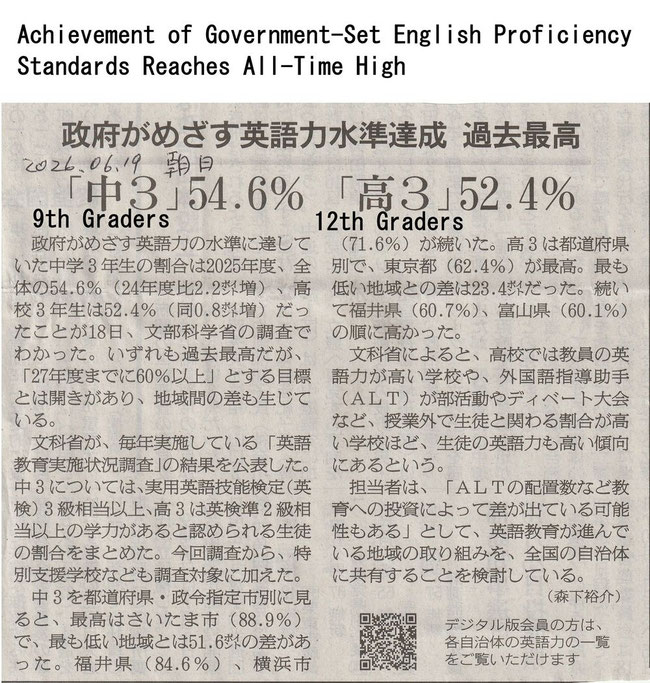
先日、6月19日(金)の新聞報道記事では文部省は、自画自賛的に、中学校・高校での英語力水準達成率を過去最高としています。
しかし、40年かけて、延べ80万人もの海外からのALT(公立の小中高校)でやっとこの程度か・・・・、というのが私の感想です。
日本の外国語教育制度と教育結果は100前とほとんど変わっていません。
一方、アジア諸国で母国語と英語の両方を習得して日常的に使用している国にはシンガポール、フィリピン、マレーシア、インド、他があります。
これらの国々は公用語や教育言語として英語が広く採用されており、観光やビジネスにおいて非常に高い英語力を持っています。
この事実からもわかるように、日本の英語教育が例外的に遅れている、英語教育方法が間違っているのです。
どうすればいいのでしょうか。
私は40年以上も前から、独学で習得した英語力を活用し、海外17か国での仕事をしてきました。無料英会話道場や英検1級資格者ネットワークにも関わってきました。
https://www.office-ktk.jp/%E7%BF%BB%E8%A8%B3-%E9%80%9A%E8%A8%B3%E3%82%B5%E3%83%BC%E3%83%93%E3%82%B9/
この経験をもとに、今秋には「イヤでも身に付く、使える英語力(仮称)」という本を出版社と共同出版します。
この中で、英語学習方法の一つを例示できれば、と思っています。
https://www.office-ktk.jp/%E8%91%97%E4%BD%9C-%E8%AC%9B%E6%BC%94-%E8%AC%9B%E7%BE%A9/
ALTs (Assistant Language Teachers) and the Effectiveness of English Education Reform in Japan:
A recent newspaper article on Friday, June 19, reported that the Ministry of Education, Culture, Sports, Science and Technology (MEXT) was patting itself on the back, claiming that the rate of students achieving the required English proficiency levels in junior high and high schools had reached a record high.
However, my reaction is: “After 40 years and a total of 800,000 ALTs from overseas (in public elementary, junior high, and high schools), is this really all we’ve managed to achieve…?”
Japan’s foreign language education system and educational outcomes have remained virtually unchanged for the past 100 years.
In contrast, among Asian countries where people acquire and use both their native language and English on a daily basis are Singapore, the Philippines, Malaysia, India, and others.
In these countries, English is widely adopted as an official or educational language, and people possess a very high level of English proficiency for tourism and business.
As this fact makes clear, Japan’s English education is exceptionally behind, and its teaching methods are flawed.
What should be done?
For over 40 years, I have worked in 17 countries overseas, utilizing the English skills I acquired through self-study. I have also been involved with free English conversation workshops and a network of Eiken Grade 1 certificate holders.
Based on this experience, I will be co-publishing a book this fall with a publisher titled “Practical English Skills You’ll Master Whether You Like It or Not” (working title).
In this book, I hope to provide an example of one method for learning English.